

The cybercrime ecosystem has evolved far beyond isolated ransomware operators and opportunistic malware campaigns. Modern threat actors increasingly function as specialized service providers, offering infrastructure, tooling, and operational support to other criminal groups. One of the most alarming examples of this evolution is Fox Tempest, a financially motivated threat actor that has built a sophisticated Malware-Signing-as-a-Service (MSaaS) operation designed to help cybercriminals bypass enterprise security defenses and distribute malicious software at scale.
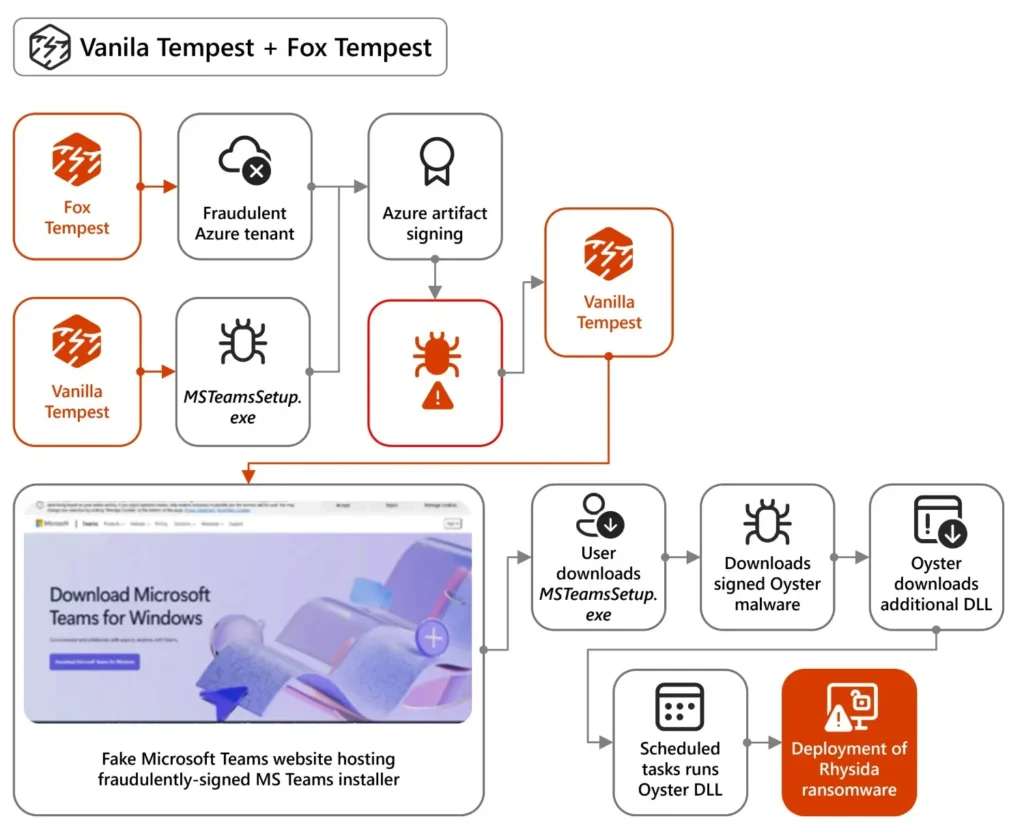
Fox Tempest gained prominence for abusing Microsoft Artifact Signing infrastructure to generate fraudulent short-lived code-signing certificates. These certificates allowed malware binaries to appear as legitimately signed software, significantly increasing the probability of successful execution within targeted environments. Microsoft Threat Intelligence linked the actor to more than one thousand fraudulent certificates and hundreds of Azure tenants used to sustain its criminal ecosystem. The operation became so widespread that Microsoft’s Digital Crimes Unit (DCU), in partnership with Resecurity, launched a coordinated disruption effort in May 2026 targeting Fox Tempest’s infrastructure and operational model.
How Fox Tempest Weaponized Trusted Code Signing
Code signing is traditionally intended to assure users and operating systems that software originates from a trusted source and has not been altered. Fox Tempest exploited this trust model by fraudulently obtaining Microsoft-issued certificates through Artifact Signing, previously known as Azure Trusted Signing. These certificates were valid for only 72 hours, but that short lifespan proved sufficient for cybercriminals to distribute malware before detection and revocation occurred.
The threat actor likely relied on stolen identities from the United States and Canada to pass identity validation checks required for obtaining verifiable credentials. This enabled Fox Tempest to impersonate legitimate organizations and acquire valid signing capabilities from Microsoft infrastructure itself. Once obtained, these certificates were used to sign malware disguised as trusted enterprise applications such as Microsoft Teams, AnyDesk, Webex, and PuTTY. The result was highly convincing malware capable of bypassing endpoint security solutions and user suspicion.
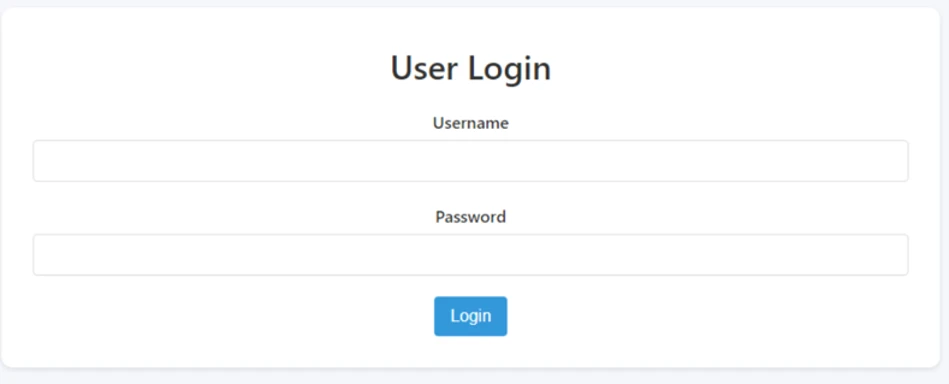
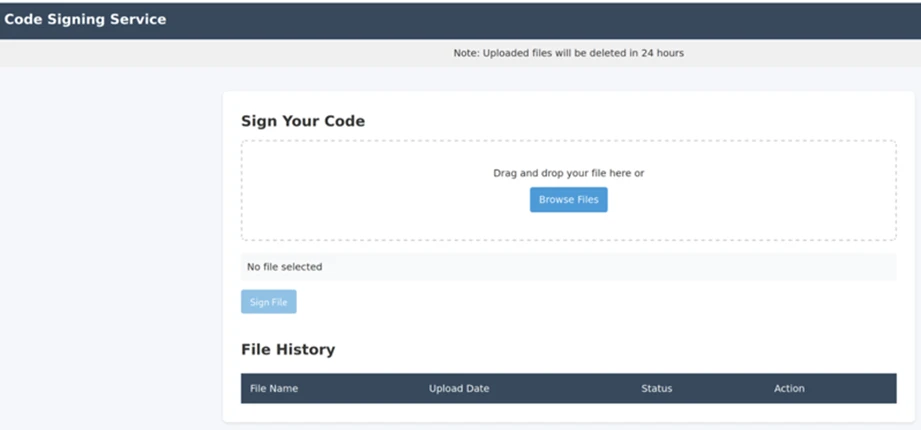
Fox Tempest operated a dedicated platform called signspace[.]cloud, which functioned as the commercial front end for its MSaaS operation. Customers could upload malicious binaries through a structured portal where Fox Tempest administrators would process and return fraudulently signed files. The service relied on Azure-hosted infrastructure, custom administrative tooling, and even GitHub repositories that exposed portions of the backend signing architecture.
A Criminal Business Model Built for Scale
Unlike traditional ransomware groups that directly compromise victims, Fox Tempest specialized in enabling downstream attacks. Its customers included ransomware affiliates and malware distributors associated with groups such as Vanilla Tempest, Storm-0501, Storm-0249, and Storm-2561. These actors used Fox Tempest-signed malware in real-world intrusions affecting healthcare, government, financial services, and education sectors globally, including victims in India, the United States, France, and China.
The operation displayed a level of maturity commonly associated with legitimate software-as-a-service businesses. Fox Tempest handled infrastructure management, customer onboarding, financial transactions, and technical support. Cybercriminals reportedly paid between $5,000 and $9,000 for signing access, with premium tiers receiving faster processing priority. Transactions and customer communications were coordinated through Telegram channels such as “EV Certs for Sale by SamCodeSign.”
In early 2026, Fox Tempest further streamlined operations by providing customers with preconfigured virtual machines hosted through Cloudzy infrastructure. These environments allowed threat actors to upload malware directly into Fox Tempest-controlled systems and receive signed binaries with minimal operational exposure. This reduced friction for customers while improving operational security for the MSaaS provider itself.
Fox Tempest and the Rise of Trusted Malware Delivery
One of the most dangerous aspects of Fox Tempest’s operation is its role in helping malware blend seamlessly into legitimate enterprise activity. The case involving Vanilla Tempest illustrates how effective this strategy became. Vanilla Tempest distributed trojanized Microsoft Teams installers through malicious advertisements and SEO poisoning campaigns. Victims searching for Teams downloads were redirected to attacker-controlled websites hosting fake installers signed with Fox Tempest certificates.
When executed, these counterfeit installers deployed the Oyster backdoor, also known as Broomstick, a modular implant capable of persistence, command-and-control communication, reconnaissance, and payload delivery. In several incidents, attackers later deployed Rhysida ransomware after gaining footholds through these signed binaries. Because the malware appeared legitimately signed, it could evade casual inspection and some automated defenses.
Our Opinion on the Fox Tempest Case
The Fox Tempest operation demonstrates a major turning point in the cybercrime landscape. Instead of isolated hackers conducting end-to-end attacks, the ecosystem is increasingly becoming modular and service-oriented. Specialized groups now focus on one capability—such as malware signing, access brokerage, or ransomware deployment—while collaborating to maximize efficiency and profit. This mirrors legitimate cloud-based business models, except applied to cybercrime.
What makes Fox Tempest particularly dangerous is not merely the malware itself, but its abuse of trust. Enterprises depend heavily on digital signatures to validate software authenticity. When attackers can manipulate trusted signing infrastructure, the effectiveness of conventional endpoint defenses diminishes significantly. Security teams can no longer assume that signed software is inherently safe. The case also highlights the growing challenge cloud providers face in balancing accessibility with abuse prevention. Identity verification systems, while robust, remain vulnerable to stolen or synthetic identities. Threat actors are increasingly exploiting these weaknesses at industrial scale.
Microsoft’s rapid revocation of certificates and infrastructure takedown is a positive step, but the broader issue remains unresolved. Similar MSaaS operations are likely to emerge because the economic incentives remain extremely strong. Organizations must therefore adopt layered defenses, behavioral monitoring, zero-trust principles, and stronger application control policies rather than relying solely on digital signatures for trust validation.
