

In March 2026, researchers uncovered a concerning malware campaign being quietly promoted in private Telegram groups. This threat, now known as CrystalX RAT, is not just another remote access tool—it’s a full-service malicious platform offered under a malware-as-a-service (MaaS) model. What makes it stand out is the unusual mix of features packed into a single toolkit.
Unlike traditional RATs that focus mainly on remote control, this one combines spying tools, credential theft, system manipulation, and even prank-based disruptions. That mix makes it both dangerous and unpredictable.
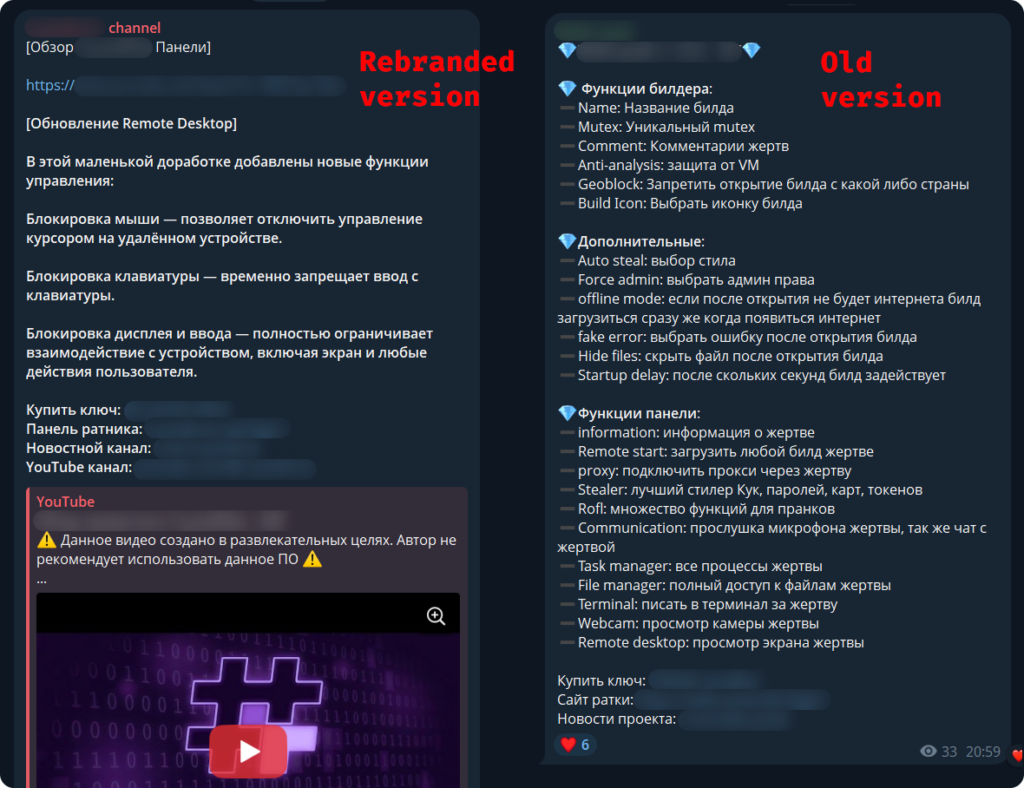
How CrystalX RAT Emerged
The first traces of this malware appeared in January 2026 in Telegram chats used by RAT developers. Initially, it was introduced as “Webcrystal RAT.” Observers quickly noticed similarities with an older tool called WebRAT (also known as Salat Stealer). The control panel design, Go-based development, and even bot messages used to sell access were almost identical.
Soon after, the malware was rebranded as CrystalX RAT and moved to a new Telegram channel. Its promotion became more aggressive, including giveaways, polls, and even a dedicated YouTube channel showcasing its features. This shift shows clear intent to scale its user base and attract more cybercriminals.
Builder and Evasion Techniques
CrystalX RAT comes with an automated builder that allows buyers to customize payloads. Attackers can configure geoblocking, choose icons, and enable anti-analysis protections.
Each malware sample is compressed with zlib and encrypted using ChaCha20 with a fixed 32-byte key and 12-byte nonce. On top of that, several defense evasion techniques are included:
- Detection of proxy tools like Fiddler or Burp Suite through registry checks
- Virtual machine detection via system processes and hardware checks
- Continuous anti-debug loops monitoring execution behavior
- Patching of Windows security functions like AmsiScanBuffer and EtwEventWrite
These features make analysis and detection more difficult.
Data Theft Capabilities
Once executed, the malware connects to its command-and-control (C2) server using WebSockets. It gathers system data and sends it in JSON format.
The stealer module targets platforms like Steam, Discord, and Telegram. It also extracts browser data using a tool called ChromeElevator, which is unpacked and executed from the temp directory.
Interestingly, at the time of analysis, some builds had the stealer temporarily removed. Open-source intelligence suggests the developer is working on improving this feature before reintroducing it.
Keylogging and Clipboard Manipulation
CrystalX RAT includes a real-time keylogger that sends user input directly to the attacker.
It also manipulates clipboard data, which is especially dangerous for cryptocurrency users. The malware can inject a malicious browser extension that replaces copied wallet addresses with attacker-controlled ones.
This process involves:
- Creating a hidden extension directory
- Generating a script with regex patterns for crypto wallets
- Injecting the script into browser sessions using DevTools protocol
Full Remote Access and Surveillance
The RAT provides extensive remote control features. Attackers can:
- Execute commands via command prompt
- Upload and download files
- Browse all drives and directories
- Monitor the screen through built-in VNC
- Capture microphone audio and webcam video
To avoid interruption, attackers can disable user input during sessions.
The “Prankware” Twist
One of the most unusual aspects of CrystalX RAT is its prank feature set. These aren’t just harmless tricks—they can disrupt system usability.
Some examples include:
- Changing desktop backgrounds
- Rotating the screen
- Swapping mouse buttons
- Hiding desktop icons and disabling taskbar
- Forcing system shutdowns
- Random cursor movements
- Displaying fake messages
There’s even a built-in chat feature allowing attackers to communicate directly with victims.
Current Impact and Future Risk
Although initial infections have mainly been observed in Russia, the malware itself has no regional limits. It’s actively being updated, and its growing promotion suggests wider adoption is likely.
The combination of espionage tools, financial theft mechanisms, and disruptive features makes CrystalX RAT particularly versatile—and dangerous.
Indicators of Compromise (IOCs)
C2 Infrastructure:
- webcrystal[.]lol
- webcrystal[.]sbs
- crystalxrat[.]top
Known Hashes:
- 47ACCB0ECFE8CCD466752DDE1864F3B0
- 2DBE6DE177241C144D06355C381B868C
- 49C74B302BFA32E45B7C1C5780DD0976
- 88C60DF2A1414CBF24430A74AE9836E0
- E540E9797E3B814BFE0A82155DFE135D
- 1A68AE614FB2D8875CB0573E6A721B46
Our Take on This Threat
What makes CrystalX RAT truly concerning is not just its technical capabilities, but the direction it represents. Malware is no longer just about stealth or data theft—it’s evolving into customizable platforms that combine multiple attack strategies in one package. This lowers the barrier for entry, allowing even less experienced attackers to carry out complex operations.
The inclusion of prank-based features might seem trivial at first, but it reflects a deeper shift. Cybercrime is becoming more interactive and psychologically driven. Disrupting users, confusing them, or even engaging directly through chat adds another layer of control and intimidation.
Another key point is the MaaS model. By offering subscription tiers, the developers are essentially running a business. This means continuous updates, customer-like support, and ongoing improvements—making the threat more persistent over time.
From a defensive standpoint, this kind of malware is harder to track because it keeps changing. Security teams must focus not only on known signatures but also on behavior-based detection.
Overall, CrystalX RAT is a strong example of how modern malware is becoming more modular, commercialized, and adaptive. Ignoring these trends would be a mistake, especially as such tools become more accessible globally.
