

In early 2026, as tensions escalated into open conflict involving Iran, a known threat group called TA416 quickly adjusted its cyber operations. What makes this shift interesting is not just the timing, but the change in focus. Traditionally, this group did not heavily target the Middle East. However, after the conflict began, their campaigns increasingly focused on government and diplomatic organizations across that region.
This move appears strategic. Cyber actors like TA416 often follow geopolitical developments closely. By targeting embassies, ministries, and diplomatic missions, they likely aimed to gather insights about the conflict—its direction, alliances, and possible outcomes.
Reconnaissance Through Simple but Effective Methods
Before launching full-scale malware attacks, TA416 spent months collecting intelligence. One of their key techniques involved “web bugs.” These are tiny, invisible elements embedded in emails. When the recipient opens the email, the bug quietly sends back information such as IP address, device details, and the exact time the email was viewed.
This might sound basic, but it’s highly effective. It helps attackers confirm whether their targets are active and whether their emails are reaching the right people. TA416 used this method widely throughout 2025 and early 2026, sending phishing emails from free email accounts with topics ranging from humanitarian issues to political developments.
They even included links to real articles, such as discussions about European military movements, to make emails appear more believable. These links doubled as tracking tools, especially since many modern email systems block images by default, reducing the effectiveness of traditional web bugs.
Evolving Malware Delivery Techniques
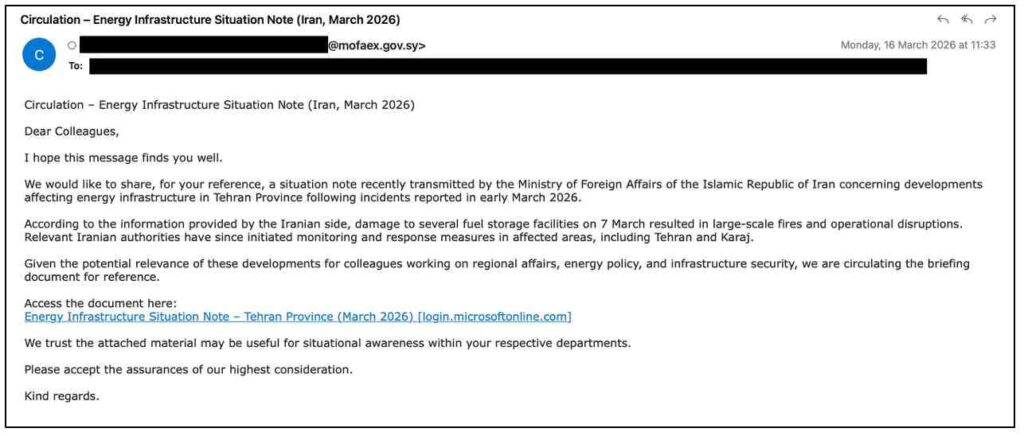
Once TA416 identified promising targets, they moved on to delivering malware. Their approach wasn’t static—they kept changing their methods to avoid detection.
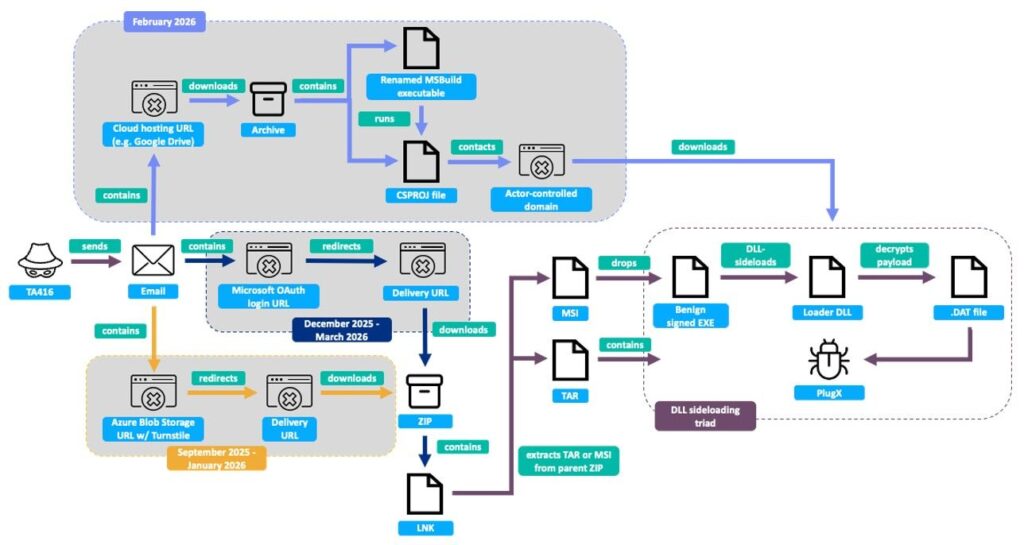
Initially, they used fake verification pages resembling security checks. These pages tricked users into downloading malicious files disguised as legitimate content. Later, they shifted to abusing cloud-based authentication systems. By exploiting trusted platforms, they could redirect users to harmful downloads without raising suspicion.
By early 2026, their tactics evolved again. They began using legitimate software tools in a deceptive way. For example, they packaged a real Microsoft build tool alongside a malicious project file. When executed, the tool unknowingly ran the malicious code, downloading additional components and ultimately installing their primary payload.
The Core Goal: Deploying PlugX Malware
Despite all these changes, one thing remained consistent—the end goal. Every attack chain was designed to install a customized version of PlugX, a well-known remote access tool.
TA416 used a technique called DLL sideloading. In simple terms, they placed malicious code alongside trusted software so that the system would load it without suspicion. Once active, PlugX allowed them to maintain access, collect data, and communicate with their servers.
They also improved how this malware communicated. Instead of using predictable patterns, they modified network behavior to blend in with normal traffic. This made detection by security tools much harder.
Expanding Infrastructure and Stealth Tactics
Another notable change was how TA416 managed its infrastructure. Instead of creating brand-new domains, they often purchased expired ones that had previously been legitimate. This gave them an advantage, as these domains already had some level of trust associated with them.
They also relied heavily on content delivery networks to hide their actual server locations. Combined with minimal fake websites, this made tracking and blocking their operations more difficult.
A Broader Pattern of Strategic Targeting
The group’s activity shows a clear pattern. Their targets shift based on global events. After focusing on Southeast Asia for years, they returned to European diplomatic targets in 2025. Then, as the Iran conflict began, they expanded into the Middle East.
This suggests their operations are not random but guided by intelligence priorities tied to real-world developments.
Our Perspective on This Situation
Looking at TA416’s behavior, one thing becomes clear: modern cyber espionage is deeply connected to global politics. These attacks are not just about stealing data—they are about understanding power, influence, and decision-making during critical moments.
What stands out is the group’s flexibility. They are not relying on a single method. Instead, they continuously test new techniques, refine their tools, and adapt to defensive measures. This level of persistence shows how serious and well-resourced such operations are.
At the same time, many of their tactics rely on human error. Phishing emails, deceptive links, and disguised files still work because people trust familiar platforms and overlook small warning signs. This highlights a major gap—not just in technology, but in awareness.
Organizations, especially those linked to government or diplomacy, need to rethink their security approach. It’s no longer enough to rely on traditional defenses. Continuous monitoring, employee training, and rapid response strategies are essential.
In our view, this case is a reminder that cybersecurity is no longer just an IT issue. It is a critical part of national security and global stability. As conflicts evolve, so will the cyber strategies behind them—and staying prepared is no longer optional.
