

Cybersecurity threats in 2025 took a decisive turn toward exploiting trust within organizations. Attackers no longer relied heavily on crude spam tactics; instead, they refined their strategies to mimic legitimate workflows and compromise identity systems. This shift has made traditional defenses less effective and forced organizations to rethink how they secure authentication and communication channels.
Phishing as the Primary Entry Point
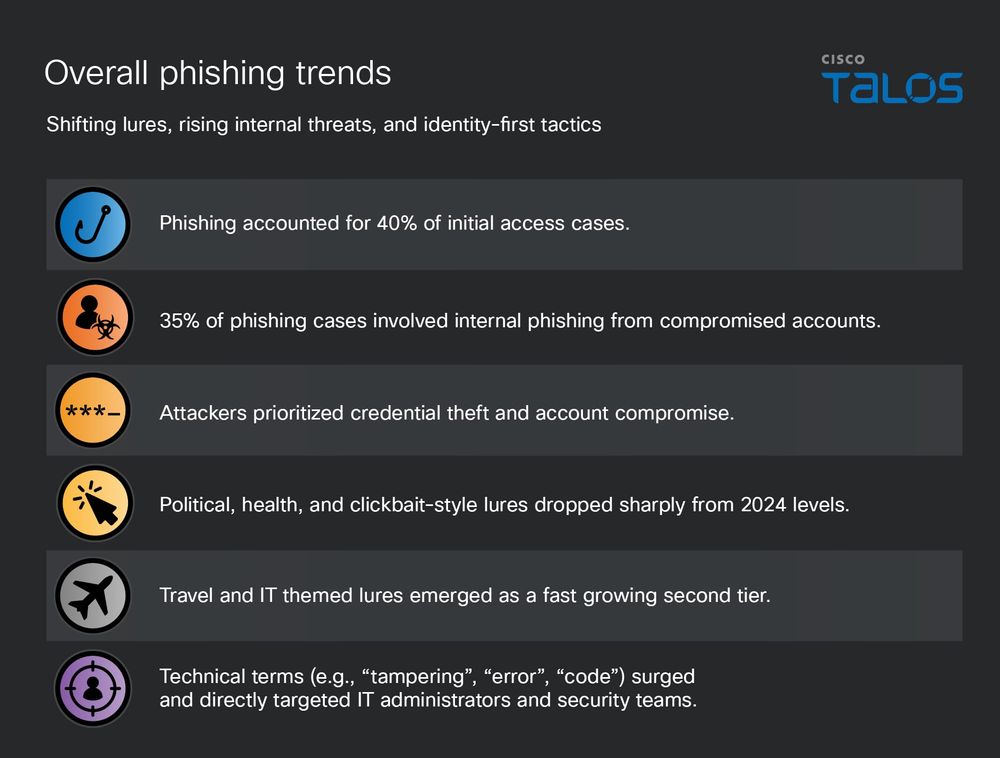
Phishing remained the dominant method of initial access, accounting for 40% of incidents. However, its execution evolved significantly. Attackers launched cascading phishing campaigns, where a compromised account was used to send convincing emails to colleagues, partners, and third parties. This created a chain reaction built entirely on trust.
Email content also became more sophisticated. Instead of obvious scams, phishing emails now resemble routine business communications such as IT updates, travel approvals, and expense reports. These messages often exploit familiarity and repetition, reducing suspicion among employees. Keywords like “request,” “invoice,” “report,” and “fwd” appeared in 60% of malicious subject lines, while more technical terms such as “token” and “configuration” targeted IT teams directly.
A notable tactic involved abusing Microsoft 365 Direct Send, allowing attackers to spoof internal emails without compromising actual accounts. Because these emails appear internal, they often bypass both human scrutiny and automated filters, making them highly effective.
MFA and Identity-Based Attacks
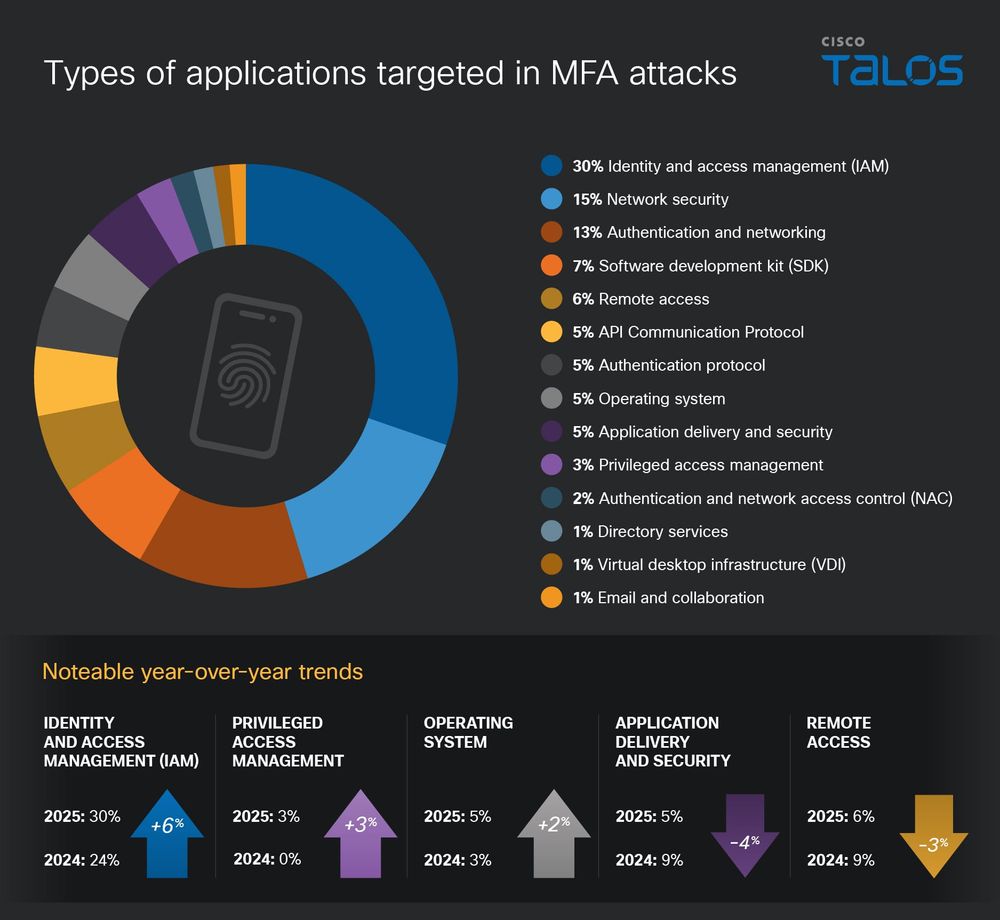
Multi-factor authentication (MFA), once considered a strong defense, became a major target. Nearly one-third of MFA spray attacks focused on identity and access management (IAM) systems. Attackers exploited authentication workflows to gain access to sensitive resources, often capturing SSO tokens to escalate privileges or alter security settings.
Additionally, device compromise attacks surged by 178%, largely driven by voice phishing campaigns. These attacks trick administrators into registering malicious devices, effectively bypassing traditional access controls.
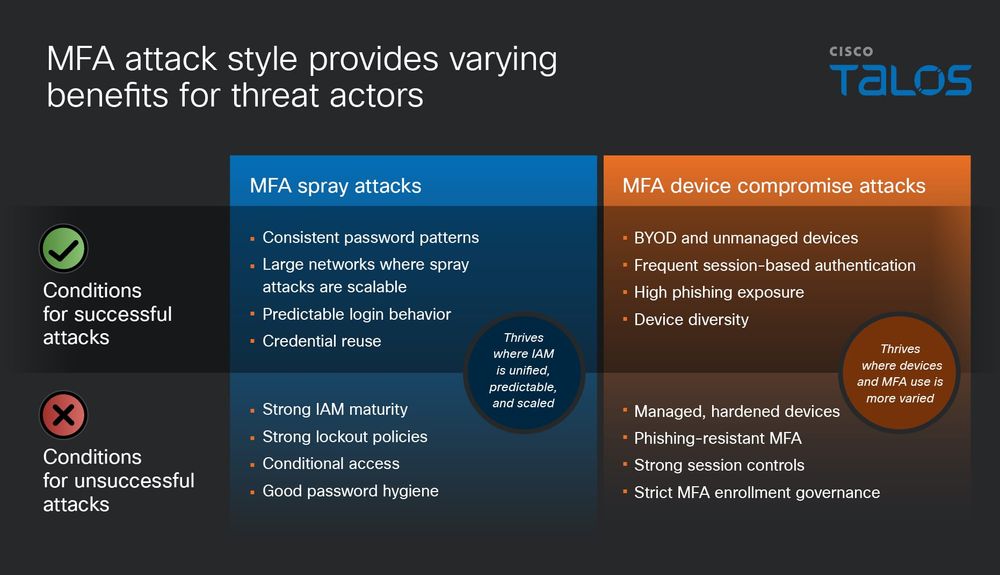
Different environments faced different risks. Stable enterprise systems were more vulnerable to MFA spray attacks, while dynamic environments—like higher education institutions—were more exposed to device compromise due to unmanaged devices and weaker onboarding controls.
Defensive Strategies
Organizations must adapt by focusing on context-aware security. Key measures include:
- Enforcing stricter email authentication (SPF, DMARC)
- Blocking unauthorized external access to internal systems
- Applying equal scrutiny to internal and external emails
- Strengthening MFA with phishing-resistant methods
- Implementing device trust and session control policies
Our Perspective on the 2025 Threat Landscape
The developments outlined above reveal a critical truth: cybersecurity is no longer just a technical problem—it is a trust problem. Attackers are exploiting human behavior, organizational habits, and systemic assumptions rather than purely technical vulnerabilities.
What stands out most is the weaponization of familiarity. Employees are conditioned to process repetitive workflows quickly, and attackers are capitalizing on that efficiency. This creates an inherent conflict between productivity and security. Organizations that fail to address this gap will continue to face breaches, regardless of how advanced their tools are.
Another concern is the growing fragility of identity systems. As businesses centralize access control through IAM platforms, they unintentionally create high-value targets. A single compromised identity can unlock an entire ecosystem, making prevention and monitoring more critical than ever.
In our view, the future of defense lies in adaptive security models—systems that continuously evaluate trust rather than assuming it. This includes behavioral analysis, zero-trust architecture, and stronger user education. Technology alone cannot solve this issue; organizations must cultivate a culture where skepticism is normalized and verification is routine.
Ultimately, resilience in 2025 and beyond will depend on how well organizations balance usability with vigilance.
