

Recent research from three Hong Kong universities has explored a fascinating yet concerning concept: using fiber-optic cables as a medium for eavesdropping. Traditionally, fiber optics are considered the gold standard for secure, high-speed data transmission. However, this study reveals that these ultra-thin glass fibers are sensitive to environmental vibrations, which can subtly influence optical signals passing through them .
How the Attack Works
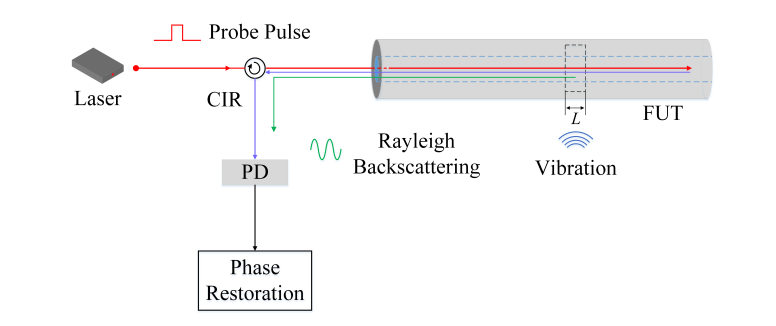
Fiber-optic cables rely on light signals to transmit data. When exposed to vibrations—such as footsteps or sound waves—these signals experience minor distortions due to a phenomenon known as Rayleigh scattering. By sending controlled optical pulses and analyzing the reflected signals, an attacker can theoretically detect these disturbances and reconstruct environmental sounds.

The researchers demonstrated that while strong vibrations like footsteps can be detected with reasonable clarity, capturing human speech remains highly challenging. Even under controlled lab conditions, reconstructing conversations proved impractical without additional assistance. To overcome this, the researchers proposed introducing a physical “bug” at the cable entry point. This device converts sound into amplified vibrations, making signal interception more feasible.
Practical Challenges
Despite its novelty, this method faces significant real-world barriers. Access to fiber infrastructure is tightly controlled by Internet Service Providers (ISPs), and attackers would need direct control over the Optical Distribution Network (ODN). Additionally, fiber cables rarely run through sensitive areas like executive offices, limiting the effectiveness of such attacks.
Another hurdle is signal quality. Everyday environmental noise introduces interference, making it difficult to isolate meaningful audio data. Without a dedicated vibration-enhancing device, extracting intelligible speech remains largely theoretical.
Why This Matters
The key advantage of this approach lies in stealth. Unlike traditional bugs that transmit data via radio or cellular networks, fiber-based eavesdropping leaves minimal detectable traces. It also allows attackers to operate from kilometers away, reducing physical risk and increasing anonymity. This highlights a broader cybersecurity concern: side-channel attacks exploiting unintended system behaviors.
Our Opinion: Innovation vs. Real-World Risk
While the concept of fiber-optic eavesdropping is technically impressive, its real-world threat level appears limited at present. The attack requires a combination of rare conditions: physical access to network infrastructure, specialized equipment, and often the addition of a secondary device to amplify vibrations. These prerequisites significantly reduce its practicality compared to simpler surveillance methods.
However, dismissing this research entirely would be a mistake. History has shown that many “theoretical” attacks evolve into practical threats as technology advances. Improvements in signal processing, machine learning, and sensor sensitivity could eventually make such techniques more viable. Additionally, the stealth advantage of this method—especially its resistance to conventional detection tools—makes it particularly noteworthy for high-security environments.
From a defensive standpoint, this research underscores the importance of holistic security. Organizations often focus on software vulnerabilities while overlooking physical and side-channel risks. Securing network infrastructure, monitoring unusual signal behavior, and implementing stricter access controls can help mitigate such emerging threats.
In conclusion, fiber-optic eavesdropping is not an immediate danger but a glimpse into the future of cybersecurity challenges. It serves as a reminder that even the most trusted technologies can harbor unexpected vulnerabilities, reinforcing the need for continuous innovation in both attack and defense strategies.
