

The FIFA World Cup 2026 is expected to become one of the largest sporting events in history, attracting billions of viewers and millions of travelers across the United States, Canada, and Mexico. While fans prepare for matches, hospitality packages, travel bookings, and merchandise purchases, cybercriminals are simultaneously building sophisticated scam infrastructures designed to exploit the excitement surrounding the tournament.
Major global events consistently create ideal conditions for cybercrime. High consumer demand, urgency-driven purchasing behavior, international transactions, and heightened online activity provide attackers with numerous opportunities to conduct fraud, phishing campaigns, credential theft operations, and financial scams. Recent threat intelligence research indicates that FIFA World Cup-themed malicious domains, phishing websites, and impersonation campaigns are already active months before the tournament reaches peak engagement.This article examines the emerging FIFA World Cup 2026 scam ecosystem, the tactics used by threat actors, and the security measures individuals and organizations should implement to reduce risk.
Why Mega Sporting Events Attract Cybercriminals
Cybercriminals closely monitor events that generate significant public attention. Sporting tournaments such as the FIFA World Cup create unique opportunities because millions of users simultaneously search for tickets, accommodation, transportation, streaming services, and event-related information.Unlike traditional phishing campaigns that rely on generic lures, World Cup-themed scams leverage emotional triggers including excitement, scarcity, urgency, and fear of missing out. Fans often rush to purchase limited-availability tickets or discounted travel packages without thoroughly verifying the legitimacy of websites or vendors.
Threat actors understand these behavioral patterns and design their attacks accordingly. As a result, fraudulent domains, fake promotional campaigns, and impersonation websites tend to appear long before the first match begins. Security researchers have observed attackers establishing infrastructure months in advance, allowing them to build credibility and attract victims before the tournament reaches peak visibility.
The Rise of Fake FIFA Websites and Domain Impersonation
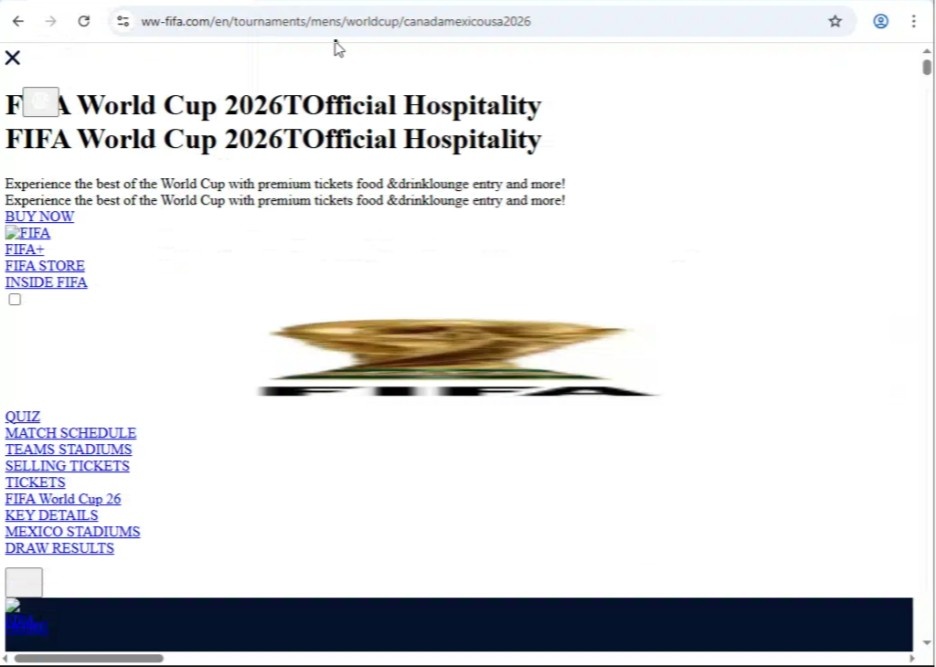
One of the most common attack vectors associated with the FIFA World Cup 2026 involves domain impersonation. Attackers register websites that closely resemble legitimate FIFA-owned domains and official tournament portals. These malicious websites frequently use typosquatting techniques, where a domain differs from the legitimate URL by only a single character or minor variation. The goal is to deceive users into believing they are interacting with an official FIFA platform when they are actually submitting personal or financial information to attackers.
Threat intelligence investigations have identified multiple examples of fraudulent domains replicating FIFA branding, ticketing workflows, and hospitality registration processes. In many cases, the websites include convincing visual elements, logos, navigation structures, and promotional content designed to appear authentic. The objective is typically credential theft, payment fraud, or collection of personally identifiable information (PII).
Fake Ticket Sales and Hospitality Package Fraud
Ticket scams remain one of the most lucrative fraud categories during major sporting events. Cybercriminals create websites offering premium match tickets, VIP experiences, hospitality packages, and exclusive access opportunities at prices that appear attractive to fans.Victims are often encouraged to complete purchases immediately due to claims of limited availability or impending sellouts. Once payment is made, the tickets never arrive, or the victim receives fraudulent documents that are rejected during verification processes.
The increasing value of World Cup tickets further amplifies the risk. As legitimate ticket prices rise, fans become more likely to seek alternative purchasing channels, creating additional opportunities for fraudsters to operate through unofficial marketplaces and counterfeit ticketing platforms. Security experts and law enforcement agencies continue to emphasize that consumers should only purchase tickets through authorized FIFA channels.
Recruitment Scams Targeting Job Seekers
Beyond fans and ticket buyers, cybercriminals are also targeting individuals searching for employment opportunities related to the tournament. Fake recruitment portals claim to offer jobs associated with event operations, hospitality management, logistics, customer support, and other World Cup-related services. These websites often request resumes, identity documents, passport information, and financial details under the guise of employment verification.
Such campaigns serve multiple criminal objectives. Attackers may collect sensitive identity information for future fraud, conduct advance-fee scams requiring victims to pay processing charges, or distribute malware disguised as application forms and onboarding documents. Research has already identified fraudulent employment-related domains impersonating FIFA recruitment activities.
Streaming Scams and Malware Distribution
As match broadcasts generate enormous global interest, attackers frequently exploit users searching for free or low-cost streaming options. Fraudulent streaming platforms may request account registration, payment information, or software downloads before granting access to supposedly exclusive broadcasts. In reality, many of these platforms are designed to distribute malware, harvest credentials, or generate advertising revenue through deceptive mechanisms.
The combination of high demand and regional broadcasting restrictions creates a particularly attractive environment for cybercriminals. Users attempting to bypass official distribution channels often encounter greater exposure to malicious applications, browser extensions, and phishing operations. Threat intelligence analysts expect streaming-related scams to increase significantly throughout the tournament period.
Business Risks Beyond Individual Consumers
The threat landscape extends far beyond individual fans. Organizations operating in travel, hospitality, media, transportation, retail, and financial services sectors face elevated cyber risk during the World Cup. Attackers frequently impersonate sponsors, airlines, logistics providers, event organizers, and commercial partners to launch business email compromise (BEC) attacks and phishing campaigns. These operations may target procurement teams, finance departments, customer service representatives, and executive leadership.
Security researchers have also highlighted concerns regarding ransomware campaigns, credential theft operations, and brand impersonation attacks that exploit the increased digital activity surrounding the tournament. Organizations connected directly or indirectly to World Cup-related services should anticipate increased phishing volume and heightened social engineering activity throughout the event lifecycle.
Indicators of a Potential FIFA World Cup Scam
Users should remain vigilant for common warning signs associated with fraudulent World Cup campaigns. Suspicious domains that closely resemble official FIFA websites, unrealistic discounts, aggressive countdown timers, pressure-based purchasing tactics, and requests for cryptocurrency payments should all be treated as potential indicators of fraud. Additionally, sponsored advertisements appearing in search results may not always represent official vendors and should be verified independently before interaction.
Consumers should manually enter official website addresses into their browsers whenever possible and avoid relying solely on links received through email, text messages, or social media posts. Law enforcement agencies have repeatedly emphasized that attackers frequently exploit search engine advertisements and spoofed domains to redirect users toward fraudulent platforms.
Security Best Practices for Fans and Organizations
Effective protection begins with verification. Fans should purchase tickets exclusively through authorized FIFA channels, use trusted travel providers, and rely on official broadcasters for streaming access. Multi-factor authentication should be enabled wherever possible, and users should avoid sharing personal information through unsolicited communications.
Organizations should strengthen phishing awareness training, implement email authentication technologies such as DMARC, continuously monitor for brand impersonation attempts, and establish rapid incident response procedures. Proactive monitoring of newly registered domains and malicious infrastructure can help security teams identify emerging threats before they impact customers or employees. Because attackers often prepare months in advance, defensive measures must be implemented proactively rather than reactively. Organizations that wait until the tournament reaches peak activity may find themselves responding to incidents instead of preventing them.
Our Opinion: The FIFA World Cup 2026 Scam Wave Reflects a Larger Cybersecurity Trend
The FIFA World Cup 2026 scam ecosystem is not simply a collection of isolated phishing websites or fake ticket portals. It represents a broader shift in how cybercriminals monetize global attention. Threat actors increasingly view major international events as temporary digital economies where trust, urgency, and consumer demand can be weaponized at scale. What makes these campaigns particularly effective is their psychological sophistication. Modern attackers no longer rely solely on poorly designed scam pages. Instead, they build convincing ecosystems consisting of fraudulent domains, social media promotion, sponsored advertisements, fake recruitment portals, and impersonation campaigns that closely mirror legitimate services. This significantly reduces the likelihood that average users will immediately recognize the threat.
From a cybersecurity perspective, the most concerning trend is the growing level of preparation observed before the event itself. Attackers are investing months into infrastructure development, domain registration, and social engineering strategies long before the tournament begins. This demonstrates a level of operational maturity similar to that seen in organized cybercrime groups. We believe the World Cup 2026 threat landscape serves as a reminder that cybersecurity is no longer only a technical challenge. It is increasingly a trust-management challenge. Organizations must protect their brands, and consumers must verify every transaction, communication, and website interaction. In an environment where attackers can convincingly imitate trusted entities, verification has become the most important security control available to both businesses and individuals.
