

The FIFA World Cup 2026 is expected to attract billions of viewers worldwide, making it one of the most watched sporting events in history. As football fans search for convenient ways to stream matches online, cybercriminals are preparing their own playbook. Recent cybersecurity investigations have uncovered multiple malware distribution campaigns in which threat actors disguise malicious Android applications as IPTV streaming services. These fake applications promise access to live football broadcasts but instead infect devices with sophisticated banking trojans and remote access malware designed to steal financial data, credentials, and cryptocurrency assets. The growing popularity of online streaming platforms, combined with the demand for free or low-cost access to premium sporting content, has created a perfect environment for cybercriminals. By exploiting user enthusiasm surrounding the World Cup, attackers are distributing malware capable of taking over smartphones, recording sensitive information, and conducting financial fraud without the victim’s knowledge.
Understanding IPTV Technology and Its Security Risks
IPTV, or Internet Protocol Television, is a technology that delivers television programming and multimedia content over internet-based networks rather than traditional cable, satellite, or terrestrial broadcasting systems. Legitimate IPTV services are widely used by television networks, broadcasters, and streaming providers to distribute live and on-demand content through websites and mobile applications. However, the IPTV ecosystem also includes unauthorized services that offer premium content at significantly reduced prices or even for free. These pirate IPTV platforms often attract users seeking access to sports broadcasts, international television channels, and subscription-based entertainment without paying official licensing fees. Since many unauthorized IPTV applications violate intellectual property regulations, they are typically unavailable through official app stores. Users must instead download APK files from third-party websites, forums, or unofficial application repositories. This is where the primary cybersecurity risk emerges. The threat is not IPTV technology itself but the growing number of fake applications and tampered APK packages that impersonate trusted streaming services. Cybercriminals exploit these unofficial distribution channels to deliver malware directly to unsuspecting users.
Massiv Banking Trojan Hidden Inside Fake IPTV Applications
In February, security researchers identified a malware campaign involving the Massiv banking trojan, which was being distributed through fake IPTV applications. The attackers specifically targeted users looking for television streaming services, particularly football fans eager to watch upcoming sporting events. The primary victims of these campaigns were located in Portugal, Spain, France, and Türkiye. Instead of providing functional streaming capabilities, the malicious applications frequently failed to deliver the advertised content. To avoid immediate suspicion, many of these fake apps simply loaded legitimate IPTV websites inside embedded browser windows, creating the illusion that the application was functioning normally.
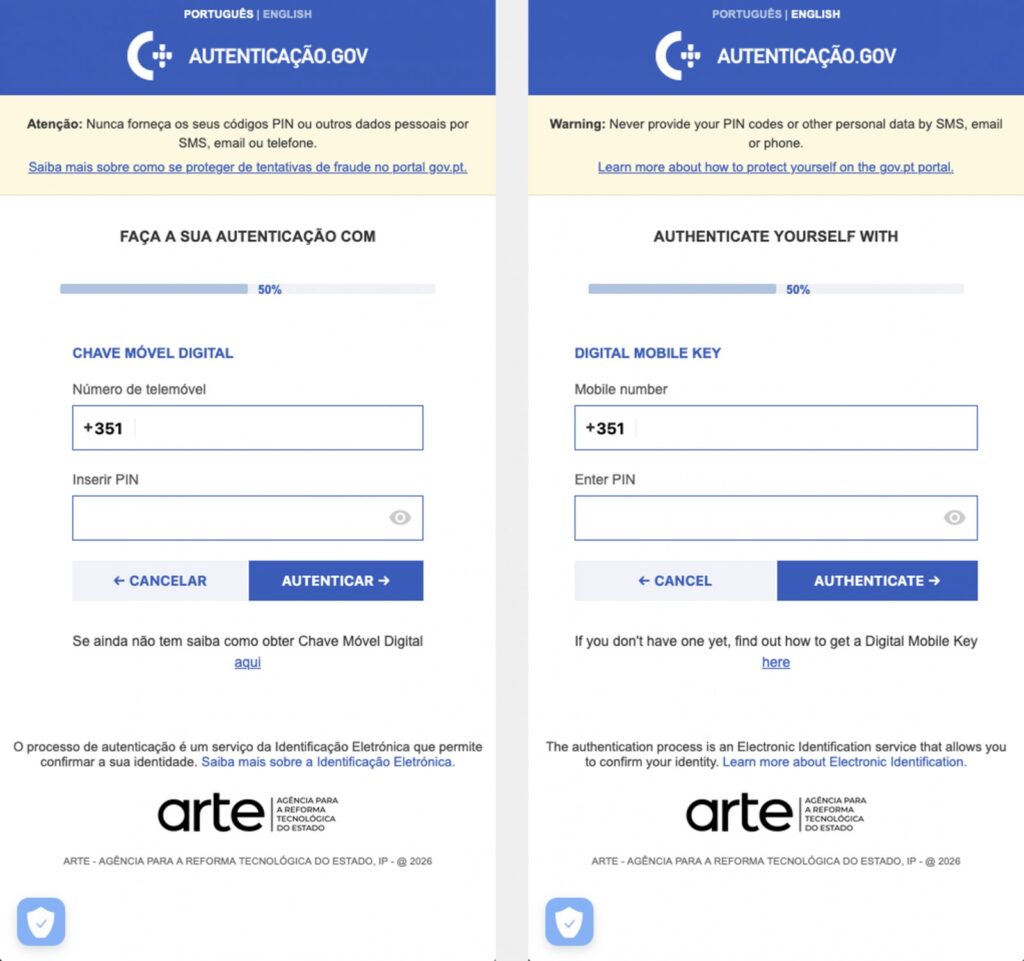
Behind the scenes, however, the malware was actively compromising the device. The Massiv trojan was equipped with several dangerous capabilities, including the ability to display fraudulent overlay windows on top of legitimate banking and government applications. These overlays were designed to trick users into entering account credentials, authentication codes, and personal information. The malware also included keylogging functionality capable of recording screen keyboard inputs and transmitting them to attacker-controlled servers. Additionally, it enabled attackers to gain significant control over infected devices, facilitating further exploitation and financial theft. One notable example involved the malware impersonating Portugal’s Chave Móvel Digital application using highly convincing fake login interfaces that closely resembled the legitimate service.
Perseus Malware: A New Generation of Android Threats
In March, researchers uncovered another sophisticated campaign leveraging fake IPTV applications to distribute a more advanced malware strain known as Perseus. Security analysis revealed that Perseus is based on the leaked source code of the Cerberus Android banking trojan, a malware family that became widely known within cybercriminal communities several years ago. Perseus exists in both Turkish and English variants, with the English version demonstrating enhanced functionality and evidence of AI-assisted development. This evolution highlights how modern malware developers continue to improve existing malicious frameworks rather than building entirely new malware families from scratch.
Unlike traditional banking trojans that focus solely on credential theft, Perseus acts as a comprehensive remote administration tool capable of providing attackers with extensive control over infected Android devices. The malware achieves this by abusing Android Accessibility Services, a legitimate feature originally designed to assist users with visual impairments and other accessibility needs. Accessibility Services provide deep interaction capabilities with device interfaces. Unfortunately, these permissions can also be exploited by malicious applications to observe, manipulate, and automate virtually every action performed on a smartphone. Cybercriminals have increasingly targeted this functionality because it enables stealthy and highly effective attacks against mobile users.
Technical Capabilities of the Perseus Malware
Once granted Accessibility Services permissions, Perseus gains broad visibility and control over the victim’s device. Researchers identified a wide range of malicious functions that significantly increase the threat level posed by the malware. The malware can continuously capture screenshots and transmit them to remote servers, providing attackers with real-time visibility into user activities. It can generate structured maps of application interfaces, enabling remote operators to navigate the device efficiently. Perseus is also capable of simulating user interactions such as taps, swipes, text entry, long presses, and other gestures.
Additional capabilities include launching applications, preventing applications from running, activating the device screen remotely, and displaying a pitch-black overlay that conceals malicious activity from the victim. The malware also performs keystroke logging, allowing attackers to capture usernames, passwords, authentication codes, and other sensitive information entered on the device. These features effectively transform an infected smartphone into a remotely controlled endpoint, giving cybercriminals the ability to conduct banking fraud, account takeovers, and cryptocurrency theft while appearing to operate as the legitimate device owner.
Targeting Sensitive Information Stored in Note-Taking Applications
One of the most concerning features discovered within the English-language version of Perseus is its ability to search for sensitive information stored inside popular note-taking applications. Researchers found that the malware specifically targets applications such as Google Keep, Xiaomi Notes, Samsung Notes, ColorNote, Evernote, Microsoft OneNote, and Simple Notes. The objective is to locate valuable information including passwords, cryptocurrency recovery phrases, authentication credentials, financial records, and personal identification data.
Many users mistakenly store highly sensitive information in note-taking applications due to convenience. Unfortunately, these applications are often not designed to provide the same level of security as dedicated password managers or encrypted vaults. By harvesting information from notes, attackers can gain access to online banking accounts, cryptocurrency wallets, and other valuable digital assets. The inclusion of this capability demonstrates how cybercriminals are adapting their tactics to modern user behavior, targeting the locations where people increasingly store their most important digital information.
Our Opinion: The Growing Convergence of Social Engineering and Mobile Malware
The fake IPTV campaigns involving Massiv and Perseus highlight a significant shift in the mobile threat landscape. In our view, these attacks demonstrate how cybercriminals increasingly rely on psychological manipulation as much as technical sophistication. The FIFA World Cup 2026 provides an ideal opportunity for attackers because it generates enormous online traffic and creates a sense of urgency among fans searching for streaming options.What makes these campaigns particularly dangerous is their ability to blend legitimate-looking functionality with hidden malicious operations. Instead of immediately revealing themselves, the applications mimic normal behavior while quietly collecting credentials, financial information, and device access permissions. This approach significantly increases infection success rates and reduces the likelihood of early detection.
The advanced capabilities found in Perseus also reflect a broader trend toward full-device compromise rather than simple credential theft. Modern malware is evolving into complete remote control platforms capable of targeting banking applications, cryptocurrency wallets, authentication systems, and personal data repositories simultaneously. As smartphones continue to serve as central hubs for communication, finance, identity management, and digital assets, users must adopt stronger security habits. The lessons from these campaigns are clear: convenience should never outweigh security, especially when downloading applications related to highly anticipated global events. Continuous awareness, cautious installation practices, and robust security controls remain the most effective defenses against the next generation of mobile cyber threats.
