

The modern battlefield is no longer limited to land, air, sea, or space. Cyber operations have become a critical component of national security strategies, enabling state and non-state actors to project influence far beyond conventional military capabilities. In this evolving threat landscape, cyberattacks targeting defense infrastructure have become increasingly significant due to their potential impact on intelligence gathering, situational awareness, and military decision-making.
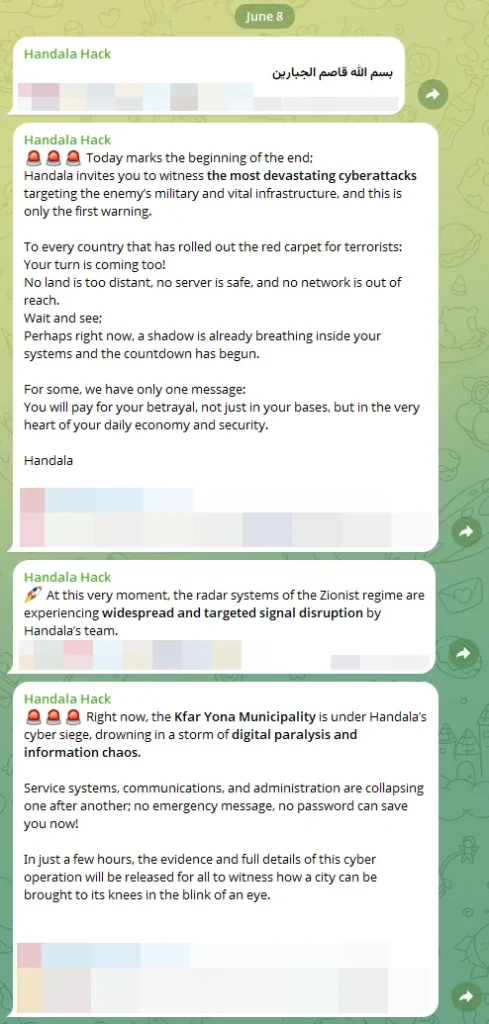
Recently, the pro-Iranian threat actor known as Handala claimed responsibility for disrupting Israeli radar systems through a cyber operation. The group alleged that it caused widespread signal interference across radar infrastructure while simultaneously issuing warnings of additional attacks targeting military and critical national assets. Although independent verification of the claims remains limited, the incident has generated substantial attention within the cybersecurity community because of the strategic importance of radar systems in national defense operations. Reports indicate that Handala has previously claimed attacks against Israeli government entities, military-related organizations, and critical infrastructure, making this event part of a broader pattern of cyber-enabled influence operations.
Understanding the Strategic Role of Radar Systems
Radar systems serve as one of the most critical components of modern air defense architecture. These systems continuously monitor airspace, detect incoming aircraft or missile threats, track movement patterns, and provide real-time intelligence to command-and-control centers. Military radar networks are integrated with various defense mechanisms, including missile interception platforms, surveillance systems, and early warning infrastructures.
A successful compromise of radar operations can potentially create temporary visibility gaps, generate false readings, delay response times, or undermine confidence in military situational awareness. Even if a cyberattack does not physically damage radar hardware, disrupting data flows, communications channels, or signal processing components may create operational challenges during periods of heightened geopolitical tension. The growing integration of radar platforms with networked command systems, cloud-based intelligence environments, and digital communication channels has significantly expanded the attack surface available to sophisticated threat actors. Consequently, cyber resilience has become just as important as physical protection in securing modern defense systems. Research on joint radar and communication architectures highlights how increasing interconnectivity introduces both operational advantages and new cybersecurity challenges.
What Handala Claimed
According to statements attributed to Handala, the group claimed to have conducted a targeted operation against Israeli radar infrastructure, resulting in widespread signal disruptions. The threat actor framed the operation as the beginning of a broader cyber campaign against military and strategic targets. Public messages distributed through associated channels suggested that additional attacks could follow and that critical networks remained vulnerable to compromise.
The group’s messaging emphasized psychological impact alongside technical disruption. Such tactics are common among cyber threat actors involved in geopolitical conflicts, where influencing public perception can be as important as achieving technical objectives. By publicly announcing successful breaches or disruptions, threat actors often seek to create uncertainty, amplify media attention, and influence adversary decision-making processes. At the time of reporting, independent verification of the extent of any operational disruption remained limited. As with many cyber conflict incidents, separating confirmed technical impact from strategic messaging requires careful analysis and access to evidence that is often unavailable to the public.
Handala’s History and Operational Evolution
Handala has emerged as one of the more visible cyber groups involved in operations targeting Israeli interests. Security researchers and public reporting have linked the group to numerous campaigns involving data leaks, website compromises, information operations, phishing activities, and alleged attacks against critical infrastructure. Some analysts have suggested potential links between the group and broader Iranian cyber ecosystems, although attribution in cyberspace remains inherently complex and often disputed.
The group gained attention after claiming attacks against radar systems and other military-related targets in 2024. In previous incidents, Handala reportedly claimed to have compromised communication systems and distributed hundreds of thousands of threatening messages to Israeli citizens. Publicly released screenshots and evidence associated with these claims have frequently been scrutinized by researchers, highlighting the ongoing challenge of verifying cyber conflict narratives during periods of geopolitical escalation. Over time, the group’s operations appear to have expanded beyond simple website defacements or data leaks into campaigns that increasingly focus on strategic influence, operational disruption, and psychological warfare. This evolution mirrors broader trends observed across modern cyber conflict environments.
Technical Pathways for Radar System Disruption
Although no detailed technical indicators have been publicly released regarding the alleged operation, there are several theoretical pathways through which radar-related capabilities could be affected by cyber activity. One possibility involves compromising supporting network infrastructure rather than attacking radar hardware directly. Modern radar ecosystems rely on interconnected systems for data processing, analytics, maintenance, software updates, and communication with command centers. Attacks against these supporting components may indirectly impact operational effectiveness.
Another potential vector involves targeting communication links that transmit radar information between sensors and control systems. Disrupting these channels could reduce visibility or create delays in decision-making processes. Advanced adversaries may also attempt signal manipulation, data corruption, or software compromise within the broader ecosystem supporting radar operations. Cyber operations against military systems often focus on command-and-control environments because they provide leverage over multiple downstream assets. Rather than disabling a radar unit itself, an attacker may seek to influence how information is collected, processed, distributed, or displayed to operators.
The Rise of Cyber Warfare as a Force Multiplier
The Handala incident highlights a broader transformation occurring within modern warfare. Cyber operations increasingly function as force multipliers capable of supporting political, military, intelligence, and psychological objectives simultaneously. Unlike traditional military operations, cyber campaigns can be conducted remotely, scaled rapidly, and executed with varying levels of deniability. Nation-state conflicts now routinely include cyber components designed to collect intelligence, disrupt operations, influence public narratives, and impose economic or strategic costs on adversaries. As critical infrastructure becomes increasingly digitized, the potential impact of cyberattacks continues to grow. Defense organizations worldwide are therefore investing heavily in cyber resilience programs, threat intelligence capabilities, zero-trust architectures, continuous monitoring systems, and cyber threat hunting initiatives. These measures aim to reduce the likelihood that adversaries can exploit interconnected defense technologies.
Challenges in Verifying Cyber Conflict Claims
One of the most significant challenges in analyzing cyber warfare incidents is the verification of public claims. Threat actors frequently exaggerate the scale of their operations for propaganda purposes, while governments may withhold information regarding successful intrusions for operational security reasons. As a result, cybersecurity analysts must evaluate multiple factors when assessing cyber conflict reports, including technical evidence, independent verification, infrastructure indicators, forensic artifacts, intelligence assessments, and official responses. Public statements alone rarely provide sufficient evidence to determine the true scope of an operation. The Handala radar disruption claim demonstrates this challenge clearly. While the group’s messaging generated significant attention, definitive technical confirmation of operational impact remains difficult to establish through publicly available information. Analysts must therefore balance caution with objective investigation when evaluating such incidents.
Our Opinion: Why This Incident Matters Beyond the Headlines
From our perspective, the most important aspect of the Handala radar disruption claim is not whether every technical detail can be immediately verified. Rather, the incident demonstrates how cyber warfare has evolved into a strategic instrument capable of influencing military operations, public perception, and geopolitical narratives simultaneously. Modern cyber conflict increasingly operates in a gray zone where technical attacks, psychological operations, information campaigns, and strategic signaling overlap. Threat actors understand that public confidence in critical systems can be almost as valuable a target as the systems themselves. Even unverified claims can force organizations to investigate, allocate resources, review defenses, and respond publicly. This case also reinforces a broader lesson for cybersecurity leaders: operational technology and defense-related infrastructure are no longer isolated environments. As connectivity increases, organizations must assume that sophisticated adversaries will target not only physical assets but also the software, communications networks, supply chains, and management platforms supporting those assets. Whether the reported radar disruption achieved its claimed objectives or not, the incident highlights the growing importance of cyber resilience in national security. Governments, defense contractors, and critical infrastructure operators should view such events as reminders that cybersecurity is no longer solely an IT concern—it is a strategic security requirement. Future conflicts will likely involve an even deeper integration of cyber operations with traditional military activities, making proactive defense and threat intelligence more essential than ever.
