

The ransomware group RansomHub has publicly claimed responsibility for an alleged cyberattack against Luxshare Precision Industry Co. Ltd., a major Chinese electronics manufacturer best known as a key supply-chain partner for Apple. Luxshare plays a significant role in assembling several flagship Apple products, including iPhones, AirPods, Apple Watch components, and parts used in the Vision Pro headset.
According to statements posted by RansomHub affiliates on dark-web leak forums, the attack is said to have taken place around December 2025. The group alleges it gained unauthorized access to Luxshare’s internal systems, encrypted files, and exfiltrated large volumes of sensitive data. As with many ransomware-as-a-service operations, RansomHub claims it is working with affiliates who carry out intrusions while the core group manages extortion and data-leak infrastructure.
The attackers are now threatening to publicly release or sell the stolen information unless Luxshare initiates contact. In their statements, RansomHub accuses Luxshare’s IT and security teams of attempting to conceal the incident rather than acknowledging it publicly. Such pressure tactics are common in modern ransomware campaigns, where data-leak threats are used to increase leverage even if ransom negotiations stall.
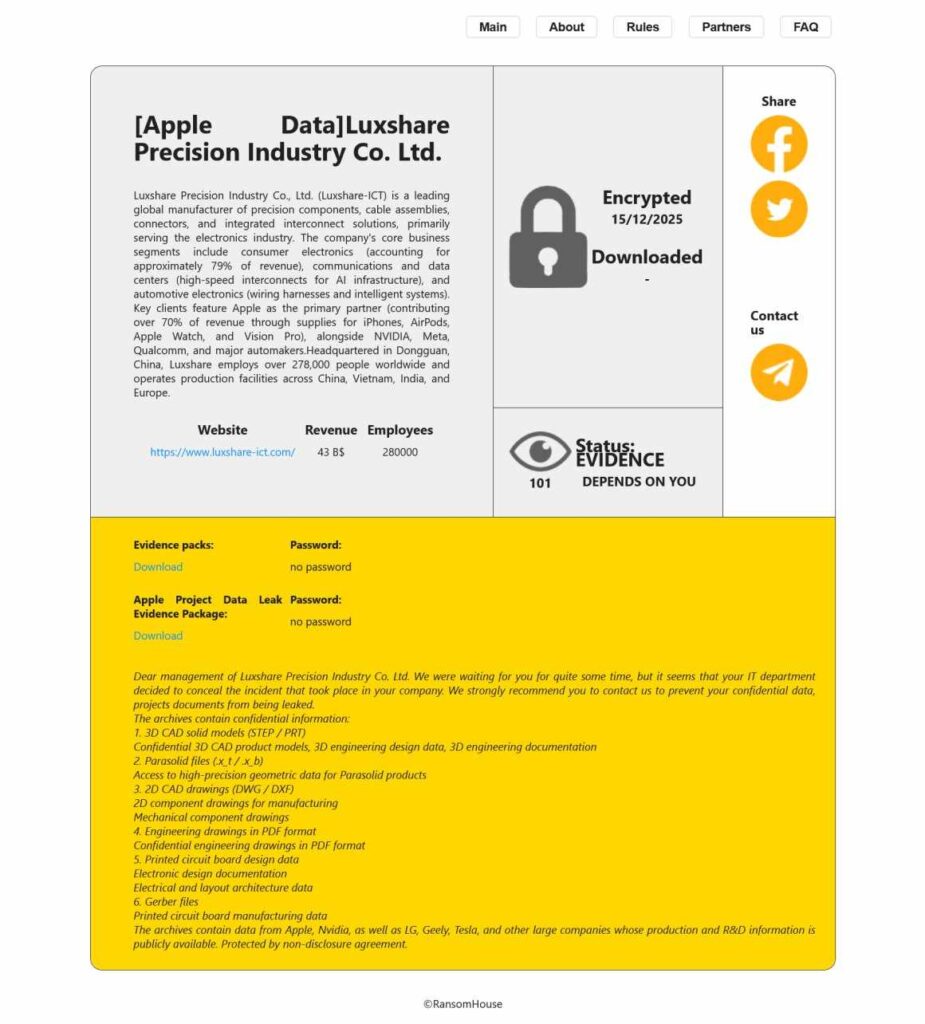
What data is allegedly involved
RansomHub claims the stolen material includes a wide range of highly sensitive technical and business information. Among the most serious allegations is the theft of product design files, such as 3D CAD models, mechanical schematics, and electrical engineering drawings. The group also says it obtained PCB layouts, manufacturing specifications, and other production-related data that could reveal how devices are built at a granular level.
In addition, the attackers allege access to high-precision geometry files used in component manufacturing, along with confidential internal project documentation tied to Apple and other clients. RansomHub further claims that some of the data may include personally identifiable information, such as employee names, job roles, and work email addresses associated with projects conducted between 2019 and 2025.
Other companies allegedly affected
Beyond Apple-related material, the attackers claim the stolen archives contain information linked to other major global companies that work with Luxshare. These reportedly include Nvidia, LG, Geely, and Tesla, among others. At this stage, these claims remain unverified, and there is no public evidence confirming that data from these companies has been compromised.
An important note of caution
Crucially, no official confirmation has been issued by Luxshare or any of the companies named by the attackers. Apple, Nvidia, and other alleged partners have not publicly acknowledged a breach or confirmed that their proprietary information was exposed.
Cybersecurity analysts point out that while RansomHub has released sample files intended to demonstrate credibility, those materials have not yet been independently authenticated. It remains unclear whether the data is genuine, complete, or representative of what the group claims to possess.
Potential risks if the claims are accurate
If the breach is ultimately confirmed, experts warn the consequences could be significant. Exposure of detailed design and manufacturing files could allow competitors to reverse-engineer products or enable counterfeiters to produce high-quality imitation components. Sensitive hardware documentation could also reveal technical weaknesses that might be exploited in future firmware, hardware, or supply-chain attacks.
Additionally, if employee data is involved, affected individuals could face heightened risks of phishing, social engineering, or targeted cyberattacks, particularly given the high-profile nature of the companies involved.
Situation still developing
For now, the alleged Luxshare breach remains unconfirmed. RansomHub maintains that it successfully infiltrated the company’s systems and extracted valuable data, while Luxshare has made no public statement addressing the claims. As cybersecurity researchers continue to analyze the leaked samples, the situation remains fluid, and further clarity will depend on independent verification or official disclosures in the weeks ahead.
