

A recently observed cyber campaign has revealed a sophisticated attack chain targeting organizations in the Czech Republic. The attackers leveraged social engineering, legitimate brand impersonation, and advanced malware techniques to infiltrate systems. By combining deceptive compliance-themed lures with fileless malware execution, this campaign demonstrates how modern threat actors blend psychological manipulation with technical stealth.
Targeting Strategy and Social Engineering
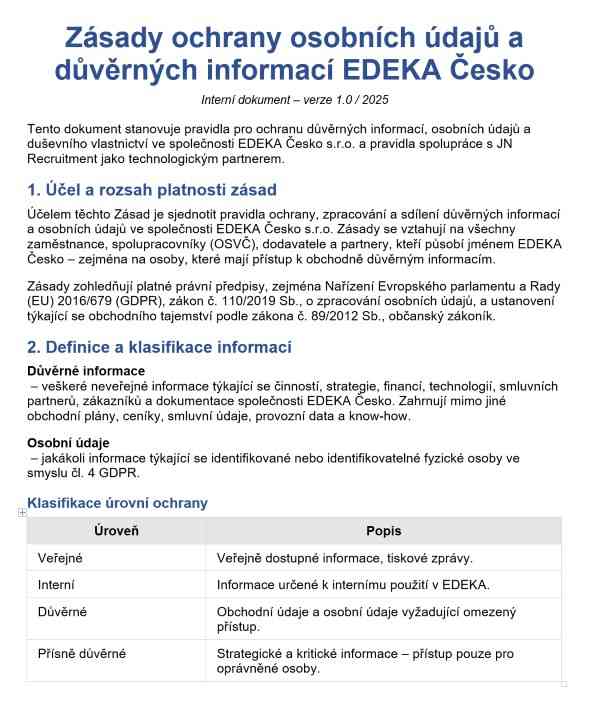
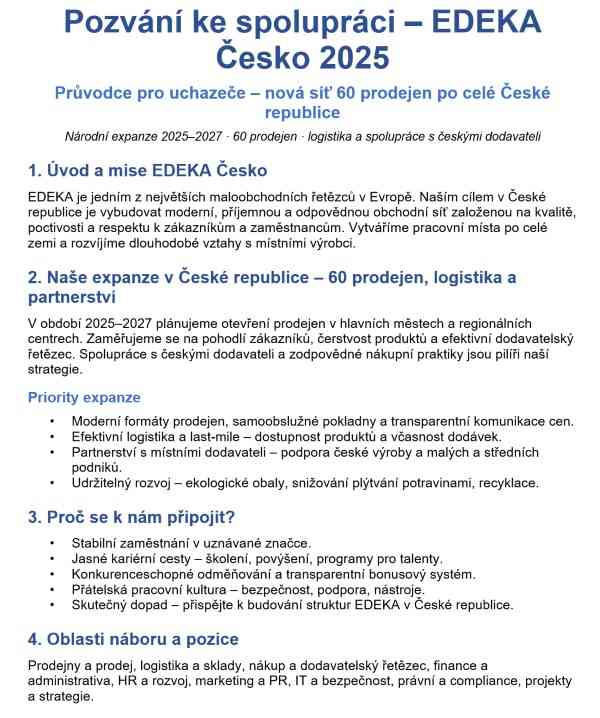
The attackers carefully crafted phishing lures designed to appeal to professionals in human resources, legal departments, and recruitment agencies. By impersonating trusted brands such as EDEKA and referencing legitimate regulatory frameworks like the Czech Data Protection Act, they enhanced credibility and reduced suspicion.
The lure documents contained compensation data and legal references, making them particularly convincing to job seekers and professionals across industries such as IT, finance, and logistics. This multi-sector targeting approach suggests a broad data-harvesting or access-oriented objective.
Initial Infection Vector
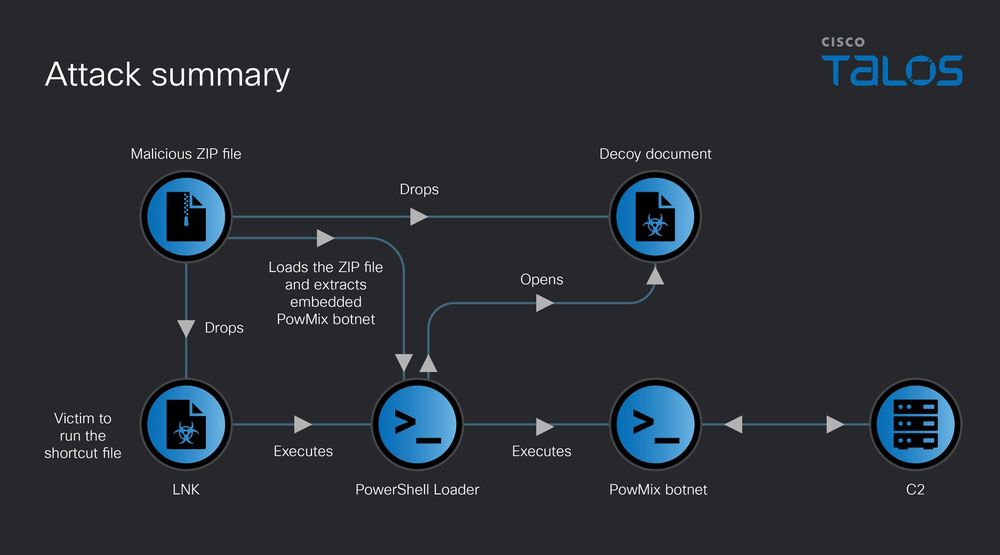
The attack begins with a malicious ZIP archive delivered through phishing emails. Inside this archive is a Windows shortcut (LNK) file. When executed, the shortcut triggers a PowerShell loader script.
This loader performs several key actions:
- Copies the ZIP file into the ProgramData directory
- Extracts embedded malicious content
- Executes payloads directly in memory
This fileless execution approach significantly reduces the chances of detection by traditional antivirus systems.
PowerShell Loader and AMSI Bypass
The PowerShell script acts as a first-stage loader, designed to evade security controls. It uses obfuscation techniques to hide its intent and dynamically constructs file paths to locate the malicious ZIP file.
A critical component of this attack is the bypass of the Antimalware Scan Interface (AMSI). The script uses reflection to manipulate the internal AmsiUtils class, forcing the system to believe AMSI has failed initialization. This effectively disables real-time scanning and allows malicious code to execute undetected.
Additionally, the script extracts hidden payloads using a hardcoded delimiter (e.g., zAswKoK) embedded within the ZIP file. After decoding and reconstructing the payload, it executes it using the Invoke-Expression (IEX) command.
PowMix Botnet: A New Threat
The second-stage payload, named PowMix, is a newly identified botnet with capabilities including:
- Remote command execution
- System reconnaissance
- Persistence establishment
- Covert communication
PowMix begins by verifying its execution environment and hiding its PowerShell window using Windows API calls. It then decrypts its command-and-control (C2) configuration using a custom XOR-based algorithm.
Persistence and Bot Identification
To maintain persistence, PowMix creates a scheduled task with a randomized hexadecimal name derived from system-specific data such as the Windows Product ID. This ensures each infected machine has a unique identity.
The botnet uses a CRC32-style checksum to generate:
- A unique Bot ID
- A task name for persistence
The scheduled task executes daily and relaunches the malicious shortcut via Windows Explorer, ensuring continuous reinfection.
Defense Evasion Techniques
PowMix incorporates several advanced evasion mechanisms:
- Mutex Control: Prevents multiple instances from running simultaneously
- Process Validation: Ensures execution under trusted processes like
svchost.exe - Jittered Communication: Randomizes C2 beacon intervals to avoid detection
- Proxy Awareness: Uses system proxy settings and credentials to blend in with legitimate traffic
These techniques collectively make detection and analysis significantly more challenging.
Command-and-Control Communication
Unlike traditional malware, PowMix avoids persistent connections. Instead, it sends periodic beacon requests with randomized timing.
Each request includes:
- Bot ID
- Encrypted heartbeat
- Timestamp
- Randomized suffix
The malware mimics REST API calls by embedding data within URL paths rather than using query parameters or POST requests. This unconventional method helps evade network monitoring tools.
Command Execution Capabilities
PowMix supports both predefined and arbitrary command execution:
Predefined Commands:
#KILL– Removes persistence and deletes malware files#HOST– Updates the C2 server dynamically
Arbitrary Execution:
For commands without a # prefix, PowMix reconstructs and executes PowerShell code dynamically, bypassing static detection methods.
Overlap with ZipLine Campaign
Researchers noted similarities between this campaign and the previously reported ZipLine campaign. Shared tactics include:
- ZIP-based payload concealment
- Scheduled task persistence
- CRC32-based bot identification
- Use of Heroku infrastructure for C2
Despite these overlaps, the final payload in this campaign remains unidentified, leaving the attacker’s ultimate objective unclear.
Conclusion
This campaign highlights the growing sophistication of modern cyber threats. By combining social engineering with advanced fileless malware techniques, attackers can bypass traditional defenses and maintain long-term access to compromised systems.
Organizations must adopt layered security strategies, including behavioral detection, endpoint monitoring, and user awareness training, to defend against such evolving threats.
Our Opinion on This Case
The PowMix campaign reflects a clear evolution in attacker methodology, where technical sophistication is paired with highly targeted social engineering. What stands out most is not just the malware itself, but the deliberate effort to align lures with real-world regulatory frameworks and professional workflows. This indicates that attackers are investing more time in understanding their targets, making detection at the human level increasingly difficult.
From a defensive standpoint, this case reinforces the limitations of signature-based security tools. The use of fileless execution, AMSI bypass, and in-memory payload delivery demonstrates that traditional antivirus solutions alone are no longer sufficient. Organizations must shift toward behavior-based detection and zero-trust architectures.
Another concerning aspect is the modular nature of PowMix. Its ability to update C2 infrastructure dynamically and execute arbitrary commands suggests that it can be repurposed for various objectives, from espionage to ransomware deployment.
In our view, the biggest takeaway is the urgent need for cybersecurity awareness at all organizational levels. Even the most advanced defenses can be bypassed if an employee unknowingly executes a malicious file. Security is no longer just a technical challenge—it is a human one.
