

The modern cybercrime ecosystem has evolved far beyond isolated malware campaigns operated by small groups of threat actors. Today’s financially motivated adversaries increasingly rely on Malware-as-a-Service (MaaS) infrastructure that enables rapid deployment, scalable operations, and continuous monetization. One of the most notable examples of this trend is the Badiis malware ecosystem, which demonstrates how commodity malware frameworks are becoming highly modular, commercially accessible, and operationally mature. Recent threat intelligence research highlights how investigators leveraged Program Database (PDB) strings, malware telemetry, and infrastructure overlaps to map a larger ecosystem connected to Badiis operations. The findings expose how threat actors are industrializing cybercrime through reusable tooling, affiliate-based delivery mechanisms, and infrastructure-sharing practices that blur the line between independent operators and coordinated cybercriminal enterprises.
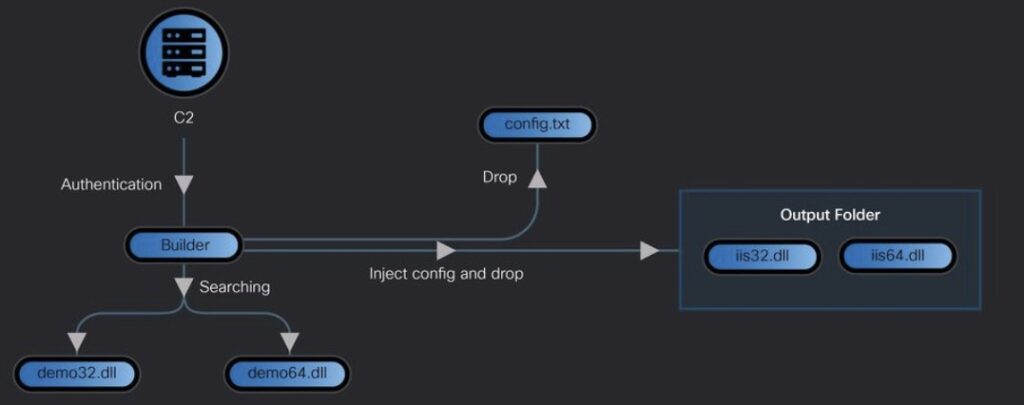
The Badiis ecosystem reflects a broader shift in the threat landscape where malware development, payload distribution, credential theft, persistence mechanisms, and command-and-control management are no longer handled by a single actor. Instead, these functions are distributed across specialized services that can be rented or purchased in underground markets. This operational model lowers the barrier to entry for inexperienced attackers while simultaneously increasing the scale and sophistication of campaigns targeting enterprises, government entities, and individual users.
PDB Strings as a Threat Intelligence Artifact
Program Database strings are frequently overlooked artifacts embedded within compiled binaries during software development. While originally intended for debugging purposes, PDB paths often reveal valuable metadata about malware development environments, operator naming conventions, internal project structures, and operational workflows. In the Badiis investigation, analysts identified recurring PDB naming patterns that enabled attribution clustering across multiple malware samples.
The technical significance of PDB strings lies in their ability to expose development consistency. Threat actors often reuse local folder structures, usernames, project names, and compilation environments across campaigns. Even when payloads are obfuscated or packed, residual PDB artifacts may remain embedded in the executable. By correlating these strings with malware hashes, infrastructure indicators, and behavioral telemetry, researchers can establish relationships between seemingly unrelated campaigns. In the Badiis ecosystem, the reuse of PDB references indicated centralized development practices and revealed connections between loaders, stealers, droppers, and persistence modules. These indicators also helped analysts identify overlapping infrastructure associated with MaaS distribution networks. Such correlations demonstrate that modern threat intelligence is no longer dependent solely on signatures or indicators of compromise. Instead, analysts increasingly rely on contextual metadata and operational fingerprints that persist across malware generations.
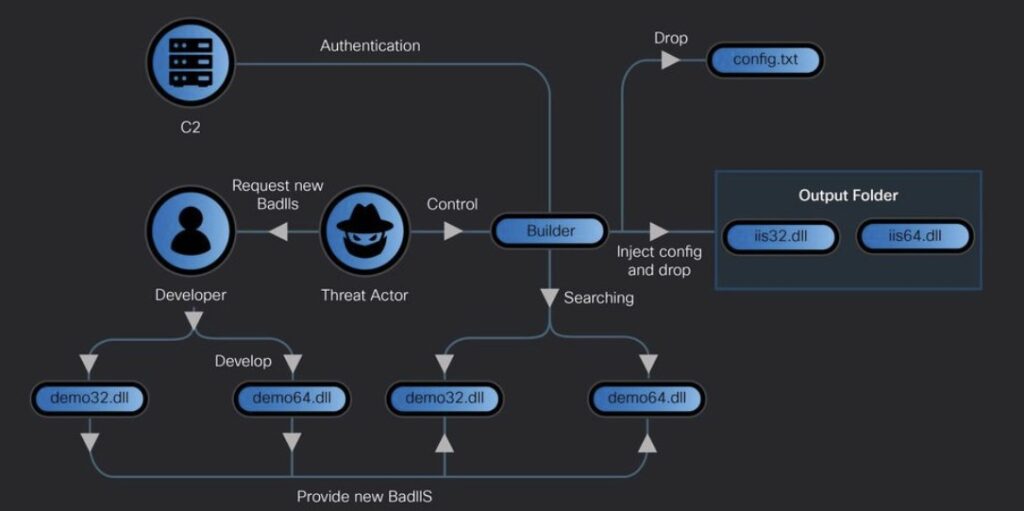
The Operational Structure of the Badiis MaaS Ecosystem
The Badiis ecosystem illustrates the maturity of cybercriminal business operations. Rather than functioning as a single malware family, Badiis operates as part of a service-oriented ecosystem where multiple actors contribute to the attack lifecycle. This includes malware developers, initial access brokers, payload distributors, infrastructure providers, and credential monetization operators. The MaaS model allows affiliates to deploy malware campaigns without needing advanced malware development expertise. Operators can purchase or lease access to loaders, crypters, phishing kits, and command-and-control panels. In return, malware developers receive recurring revenue through subscription-based access models or profit-sharing arrangements. This business structure mirrors legitimate software ecosystems, complete with customer support channels, update cycles, and feature enhancements.
Technically, the ecosystem relies heavily on layered execution chains designed to evade detection and complicate forensic analysis. Initial infection vectors often include phishing attachments, malicious downloads, cracked software installers, or trojanized applications. Once executed, lightweight loaders establish persistence, perform environment checks, and retrieve secondary payloads from remote infrastructure. These payloads may include information stealers, remote access trojans, cryptocurrency miners, or ransomware components. A particularly concerning aspect of the Badiis ecosystem is its emphasis on operational resilience. Infrastructure redundancy, rotating domains, encrypted communication channels, and modular payload delivery enable campaigns to survive takedown attempts. Even when specific servers are disrupted, affiliates can rapidly migrate operations to alternative infrastructure. This decentralized resilience is one of the defining strengths of modern MaaS operations.
Evasion, Persistence, and Detection Challenges
The technical sophistication of the Badiis ecosystem extends beyond payload delivery. Threat actors employ multiple layers of evasion techniques designed to bypass traditional antivirus solutions, endpoint detection systems, and behavioral analytics platforms. Obfuscation frameworks, anti-debugging routines, process injection techniques, and encrypted payload staging are commonly used to reduce detection rates. Persistence mechanisms observed across commodity malware ecosystems often include scheduled tasks, registry modifications, startup folder manipulation, and abuse of legitimate Windows services. These techniques allow malware to survive reboots and maintain long-term access to compromised systems. Additionally, malware operators increasingly abuse legitimate cloud services and content delivery networks to host payloads and mask malicious traffic.
From a defensive perspective, the investigation highlights the importance of behavior-based detection strategies. Traditional signature-based defenses struggle against rapidly evolving MaaS frameworks because operators continuously modify binaries, encryption methods, and infrastructure endpoints. Security teams must instead focus on anomalous process execution, unusual network communications, credential access attempts, and lateral movement patterns. Threat hunting also becomes significantly more important in environments facing commodity malware risks. Analysts should monitor for suspicious PowerShell activity, unauthorized scheduled tasks, abnormal registry changes, and outbound communication to newly registered or low-reputation domains. Combining endpoint telemetry with threat intelligence enrichment provides defenders with stronger visibility into evolving malware ecosystems.
Our Opinion on the Badiis Case
The Badiis malware ecosystem represents a critical warning for organizations that continue to rely primarily on perimeter-based defenses and signature-driven security models. What makes this case particularly significant is not merely the malware itself, but the operational maturity behind the ecosystem. The investigation demonstrates how cybercrime has evolved into a scalable service economy where malicious capabilities can be purchased, customized, and deployed with minimal technical expertise. In our view, the most dangerous aspect of MaaS ecosystems is their ability to industrialize cyberattacks. The availability of commodity loaders, stealers, and persistence tools dramatically lowers the barrier to entry for aspiring threat actors. This creates an environment where attack volume increases exponentially, even if individual operators possess limited technical skill. As a result, organizations are no longer facing isolated advanced attackers; they are confronting an entire marketplace optimized for continuous compromise.
The research also reinforces the growing importance of threat intelligence correlation and behavioral analytics. Small technical artifacts such as PDB strings can reveal hidden operational relationships that traditional malware analysis may overlook. This highlights the need for defenders to adopt intelligence-driven security strategies capable of connecting infrastructure overlaps, malware lineage, and attacker tradecraft. Ultimately, the Badiis case proves that modern cybersecurity defense requires continuous monitoring, proactive threat hunting, layered endpoint protection, and rapid incident response capabilities. Organizations that fail to modernize their defensive posture risk becoming easy targets in an increasingly commercialized cybercrime landscape.
