

Every Indian Premier League (IPL) season activates a shadow, multi-thousand-crore illegal sports betting economy that thrives parallel to the tournament. In recent years, this illicit industry has experienced a profound technological evolution, transitioning from basic gambling operations into a highly sophisticated, technology-driven ecosystem powered by clone scripts, affiliate pipelines, generative AI marketing, distributed money mule networks, and aggressive blackhat Search Engine Optimization (SEO) strategies. During the IPL 2026 season, CloudSEK mapped this extensive criminal infrastructure to uncover how threat actors acquire, retain, and financially exploit victims at scale.
Platform Architecture and Admin Dashboard Realities
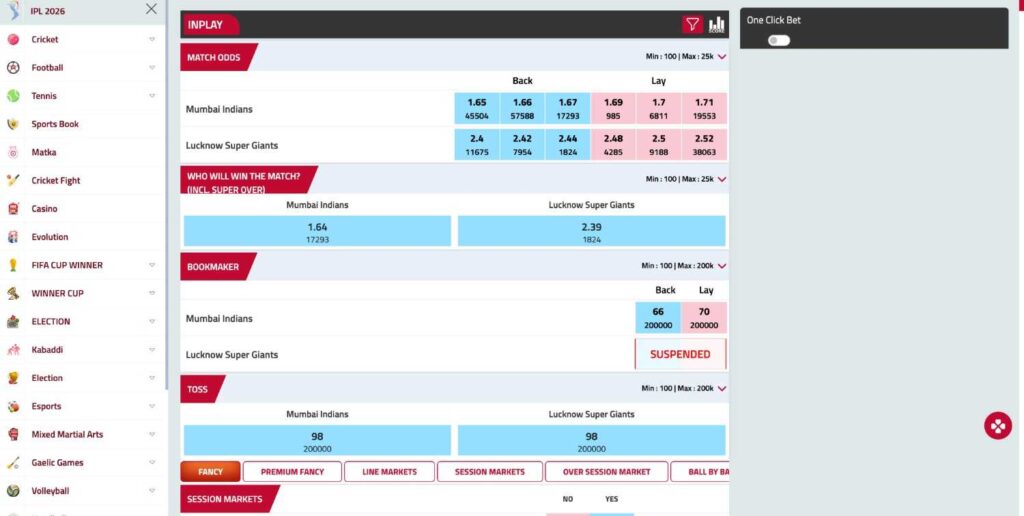
At the center of this ecosystem are advanced, consumer-facing digital sportsbooks that mimic legitimate platforms by offering live odds, in-play betting, deposit bonuses, and automated customer support. These sites are heavily built on pre-configured clone scripts bought cheaply on underground forums and Telegram channels, keeping the barrier to entry remarkably low while yielding high profit margins for new operators. A deep-dive analysis of an active administrative control panel revealed that a single centralized backend was being utilized to run more than 25 distinct betting sites simultaneously. Rather than centralized oversight, these networks operate through a distributed “agent-based” model, where localized threat actors are assigned specific territories to manage user acquisition, handle deposits, and manually manipulate payouts. The platform’s logic actively exploits user psychology by permitting minor, encouraging payouts during early stages to build false confidence. However, as financial losses inevitably compound, user withdrawal requests are systematically blocked or delayed indefinitely. Admin telemetry analyzed between May 2025 and May 2026 uncovered that over 9,300 legitimate user withdrawal requests—with individual values scaling up to ₹5 lakh—were intentionally rejected via a single click by platform agents. These calculated denials accounted for an estimated ₹4.65 crore in direct user losses. To safely route these illicit gains, operators employ a network of bank accounts registered under fraudulent business entities rather than individuals, exhibiting the classic telemetry of money mule configurations designed to obfuscate the paper trail from law enforcement.
The Tipper Funnel and Generative AI Exploitation
Because mainstream digital advertising networks prohibit illegal gambling, threat actors rely on an intricate peer-to-peer marketing matrix known as the “tipper economy”. Threat actors build highly polished digital personas across Telegram, Instagram, and YouTube Shorts, falsely presenting themselves as veteran bookmakers, professional gamblers, or former BCCI data analysts with verified prediction histories. In reality, these tippers act as high-earning affiliate marketers whose sole objective is to funnel traffic to the underlying betting platforms via custom referral tracking links, earning a direct percentage of every rupee a user deposits regardless of the match outcome. During the IPL 2026 season, CloudSEK researchers observed an aggressive escalation in the deployment of generative AI tools to amplify tipper credibility. Threat actors used deepfake audio and video cloning models to synthesize highly convincing, fabricated endorsements from prominent figures, including YouTuber Ranveer Allahbadia and Indian cricketer Smriti Mandhana. Produced at a negligible cost, these deepfakes rapidly accumulated hundreds of thousands of views across social media reels before content moderation teams could detect and flag them.

Exploiting Public Infrastructure and Secondary Debt Traps
Beneath the visible consumer layer lies a robust B2B cybercriminal supply chain focused on lead generation and search manipulation. To capture organic search traffic, platforms execute highly aggressive blackhat SEO campaigns by exploiting vulnerabilities within legitimate Indian government websites (.gov.in domains) to inject malicious backlinks and keyword-rich anchor text directly into their source code. This exploits the high domain authority inherent to government infrastructure, artificially elevating the malicious platforms on search engine results pages (SERPs) and tricking users into trusting the redirecting links. Access to these compromised servers is commoditized on underground marketplaces like Hacklink Market, allowing actors to manage their SEO spam through dedicated control panels. Concurrently, bulk SMS services utilize data harvested from historical breaches to blast unsolicited promotional texts using spoofed sender IDs. Most insidiously, the ecosystem feeds directly into a secondary threat vector: predatory fake loan apps. Targeting vulnerable users who have just suffered massive betting losses and are desperate to recoup funds, these malicious applications advertise instant, documentation-free micro-loans across social media. Upon installation, the applications harvest intrusive mobile telemetry—including contacts, photos, call logs, and location data. When the user inevitably struggles to pay the inflated interest rates, threat actors initiate severe extortion campaigns, weaponizing the stolen personal photos and contact lists to publicly humiliate and blackmail the victim.
Our Opinion: The Rise of Cybercrime-as-a-Service (CaaS) in Sports Betting
The findings from the IPL 2026 threat landscape highlight a critical reality: illegal sports betting has completely transitioned from isolated, localized gambling operations into a highly industrialized Cybercrime-as-a-Service (CaaS) model. The widespread availability of clone scripts paired with centralized multi-tenant admin panels means that traditional web-takedown strategies are fundamentally ineffective. For every frontend URL that law enforcement blocks, operators can deploy multiple exact duplicates within minutes using the exact same backend ledger.
What we find most alarming is the calculated intersection of distinct cybercriminal vectors—specifically blackhat SEO, generative AI deepfakes, and extortion-driven malware—to form a closed-loop exploitation engine. By weaponizing the high domain authority of .gov.in domains, threat actors are effectively co-opting the state’s own digital infrastructure to manufacture legitimacy. When this institutional trust is combined with low-cost, high-fidelity AI deepfakes of trusted public figures, the threat outpaces the average citizen’s digital literacy.
Furthermore, the integration of fake loan apps shifts this from a simple financial loss scenario to a severe personal security crisis involving data theft and psychological coercion. To counter this decentralized criminal industry, regulatory frameworks must evolve past reactive URL blocking. Security postures must shift toward automated, proactive threat-hunting across public infrastructure, rigorous banking compliance to detect corporate-masked money mules, and aggressive public awareness campaigns exposing deepfake manipulation mechanics.
